
The Best Direct Primary Care EMR for Your Kind of Practice
The best direct primary care EMR is the one built around the week you actually run. A solo doctor usually does best with Atlas.md or Hint's Launch plan, a new practice on a budget with Charm's free plan or a free pre-launch period, a clinic selling to employers with Hint Pro, and an integrative practice with Cerbo. Find your kind of practice below, read the short pick, then follow the link to the full guide written for it.
Direct primary care (DPC) means patients pay a monthly membership instead of you billing insurance for each visit. That one change reshapes what you need from an EMR (the electronic medical record where you chart), and the details shift again depending on who your members are and how your clinic is set up. Every price on this page is a vendor's published price, checked on each vendor's site in November 2026. Confirm them on your demo, because EMR pricing moves.
Start with your practice, not the vendor list
Most EMR roundups line vendors up and grade them. That's useful once you know what you're shopping for, but it skips the step that decides everything. A pediatric practice selling family memberships, a hybrid clinic still filing a few claims and a functional medicine doctor dispensing supplements are three very different jobs, and a vendor that's perfect for one can be a poor fit for the next.
So before you book a single demo, picture an ordinary Tuesday in your clinic. Who's on the schedule? How do members reach you? What eats your time after the last visit? Who pays the bills, the patient or an employer? Your answers point to the one or two things your EMR has to do brilliantly, and everything else becomes a tiebreaker.
| Your practice | Start with | Why |
|---|---|---|
| Solo doctor | Atlas.md or Hint Launch | One clinician price, unlimited patients |
| New practice on a budget | Charm free plan | $0 for one provider to start |
| Pediatric or family | Hint, then Elation | Flexible membership billing, strong chart |
| Hybrid with some insurance | Charm | Electronic claims add-on |
| Employer-focused | Hint Pro or Scale | Employer billing and eligibility sync |
| Integrative or functional | Cerbo | Built for cash-based integrative care |
| NP-led | Atlas.md or Cerbo | Per-provider pricing that counts NPs the same |
| Growing group | Akute Premium or Hint | Pricing for a second clinician and part-timers |
| In-house dispensing | Atlas.md | Pharmacy with unlimited inventory included |
Treat the "Start with" column as your first demo, not your final answer. Book a second demo with the runner-up and walk the same patient visit through both.
Solo doctor
A solo DPC week is a long run of short visits, messages and refills, with you doing most of it yourself or with one medical assistant. The thing that matters most is a predictable bill and a chart that doesn't fight you at 8 p.m. when you're clearing the inbox.
Start with Atlas.md or Hint's Launch plan. Atlas.md is $300 a month per registered provider with unlimited patients, and it bundles charting, membership billing, lab ordering and an in-house pharmacy. Hint Launch is $290 a month for one clinician and unlimited members, with the EMR, ePrescribing, labs and dispensing on the same record as billing. Both keep your bill flat as your panel fills. If charting quality matters more to you than price, Elation's DPC plan ($375 a month per provider, office staff included) is the one to test against them.
The full comparison, including the fees that sit outside the subscription, is in the best EMR for a solo DPC doctor.
New practice on a budget
If you're months from opening, your week is spent on contracts, a website, credentialing for labs and building your first membership plans. You have few patients and little revenue, so the priority is not paying full price for software you can't use yet.
Start with Charm's free plan, or a vendor's free pre-launch period. Charm's free plan covers one provider, up to 50 encounters a month, 1,000 patient records and a portal for 100 patients, and you add ePrescribing for $15 a month. When you outgrow it, the Provider plan is $200 a month per provider. If you'd rather start on the system you plan to keep, Atlas.md lets you try it free for 30 days before you launch, and Hint lets you pay nothing until your practice opens.
The tradeoff is switching later. Moving charts and memberships after a year is real work, so weigh the savings against that. The best EMR for your first year of DPC walks through it month by month.
Pediatric or family practice
Family practices sell memberships to whole households, see kids on a different rhythm from adults, and spend more time on vaccines, well-child visits and school forms. The membership side has to handle families gracefully, and the chart has to handle children.
Start with Hint for billing, and test Elation for the chart. Hint's membership engine supports monthly or annual billing, quarterly and semi-annual options with a discount, minimum enrollment periods and set contract lengths, which gives you room to design family pricing your way. Elation is a mature primary care chart. Neither vendor's published pages, as we checked them, spell out growth charts or vaccine tracking in a way we could confirm, so ask both to show a well-child visit and an immunization record live on the demo.
The best EMR for pediatric DPC has the questions to bring.
Hybrid practice with some insurance
Some clinics run memberships for most patients and still bill insurance for a slice of them, or keep a few insurance contracts while they transition. That week includes claims, denials and eligibility checks that a pure DPC clinic never sees.
Start with Charm. Charm offers electronic claims processing and a clearinghouse through a partnership with Optum as an add-on, alongside recurring card charges for memberships, so one system can do both. OptiMantra lists insurance billing at $0.25 a claim on top of its practitioner pricing, and Hero EMR describes itself as running insurance, cash, DPC or hybrid practices, though it doesn't publish a price, so you'd ask on the demo.
Mixing memberships and insurance raises rules about what you can bill and to whom, and those vary by payer and by state. Check your plan with a healthcare attorney before you set it up. More in the best EMR for a hybrid DPC.
Employer-focused practice
If a good share of your members come through local employers, your week includes eligibility lists, monthly invoices to HR and questions about who's covered. The EMR, or the billing system next to it, has to handle employers as customers.
Start with Hint Pro or Scale. Hint's employer-sponsored memberships (employer enrollment, eligibility autosync and consolidated billing) come with Pro and Scale, not Launch. Pro is $320 a month for one clinician and 100 members, and Scale is $770 a month for 500 members with three eligibility autosyncs included and paid onboarding required. If you're happy with your current chart, Hint also sells its membership and billing platform on its own (Core), starting at $110 a month for 100 members.
The best EMR for employer-focused DPC covers eligibility files and reporting in detail.
Integrative or functional medicine practice
Integrative DPC practices run longer visits, order more specialty labs, and often sell supplements or packages alongside memberships. They also tend to work with other practitioners, such as a dietitian or acupuncturist.
Start with Cerbo. Cerbo is popular with cash-based, functional and integrative practices, and its pricing has room for the whole team. A full-time prescribing provider is $281 a month, a supporting provider (an acupuncturist, dietitian or counselor, for example) is $127 a month, and there's a one-time setup fee of $1,195. The patient portal is $79 a month. If budget is tight, OptiMantra is $99 a month for the first practitioner and $49 for each additional one, with memberships and packages included. And if your care is built around programs and coaching, Healthie (from $45 a month billed annually on Essentials) is worth a test visit.
See the best EMR for integrative and functional DPC.
NP-led practice
Nurse practitioner-led DPC clinics look a lot like a physician's, with one more thing to plan around. Depending on your state, you may need a collaborating physician, and that relationship can affect chart review and sign-off. The rules differ a lot from state to state, so confirm yours with your board of nursing or a healthcare attorney.
Start with Atlas.md or Cerbo. Both price by provider rather than by credential. Atlas.md is $300 a month per registered provider, and Cerbo's $281 prescribing-provider price lists MDs, DOs, NPs and NDs together. Charm's Provider plan ($200 a month per provider) is the lower-cost option. On the demo, ask how a collaborating physician would get access and what that seat costs.
The best EMR for an NP-led DPC goes deeper.
Growing group
Once you add a second doctor, a part-time NP or a second location, your week gains handoffs, shared inboxes and schedules that have to line up. The EMR's pricing for extra clinicians matters more than the base price you started on.
Start with Akute Premium or Hint, and model Atlas.md. Akute Premium is $550 a month for two clinicians and 300 patients, with $0.85 for each additional patient. Hint lists a part-time clinician (someone who sees patients less than three days a week) at $112 a month, which helps if your second clinician is part time. Atlas.md stays at $300 per registered provider with unlimited patients, which is easy to forecast. Cerbo also prices part-time prescribers at $174 a month, though only multi-provider clinics can have part-time providers.
Run the numbers at your target size in the best EMR for a growing DPC group.
In-house dispensing
Dispensing generic medications at near-cost is one of the most visible perks a DPC can offer, but it adds inventory counts, lot tracking and reorders to your week. State rules on physician dispensing also vary, so check yours with your state medical board or a healthcare attorney before you stock a shelf.
Start with Atlas.md. Its in-house pharmacy comes with unlimited inventory, unlimited prescriptions and unlimited dispensing at the standard $300 per provider price. Hint's EMR also includes medication inventory and dispensing. Ask either one to dispense a medication live on the demo and show you the inventory update afterward.
The best EMR for DPC with in-house dispensing has the full checklist.
Questions that sort out any practice type
Whichever kind of practice you run, the same few questions separate a good fit from an expensive mistake.
- What will this cost at my target panel? Some vendors charge per provider, some by patient count, and some both. Price your opening panel and two or three times that.
- What sits outside the subscription? ePrescribing setup, controlled-substance prescribing, PDMP access, card processing and setup fees can add hundreds of dollars a year. Atlas.md, for example, publishes $475 to set up a prescriber for ePrescribing and $400 a year after that, and Akute charges $15 a month for controlled substances.
- Where do memberships live? If billing is in a separate tool, someone keeps member status and failed cards in sync with the chart by hand.
- What still has to be copied by hand? Texts, faxes, forms and lab results often arrive outside the EMR. None of these tools were built to talk to each other, so ask what connects and what doesn't.
That last question is where many clinics lose time, whichever EMR they choose. Some owners bring in Tabflows, a dedicated tech team that connects the tools a clinic already uses, so the EMR, phones and billing stop needing a person in the middle.
Our take
There's no single best direct primary care EMR, but there's usually a clear starting point once you name your kind of practice. Solo doctors tend to land on Atlas.md or Hint Launch, budget-first openers on Charm, employer-focused clinics on Hint Pro, integrative practices on Cerbo, and dispensing clinics on Atlas.md. Pick the guide that sounds most like your clinic, book two demos, and walk the same ordinary Tuesday through both.
The part most guides skip
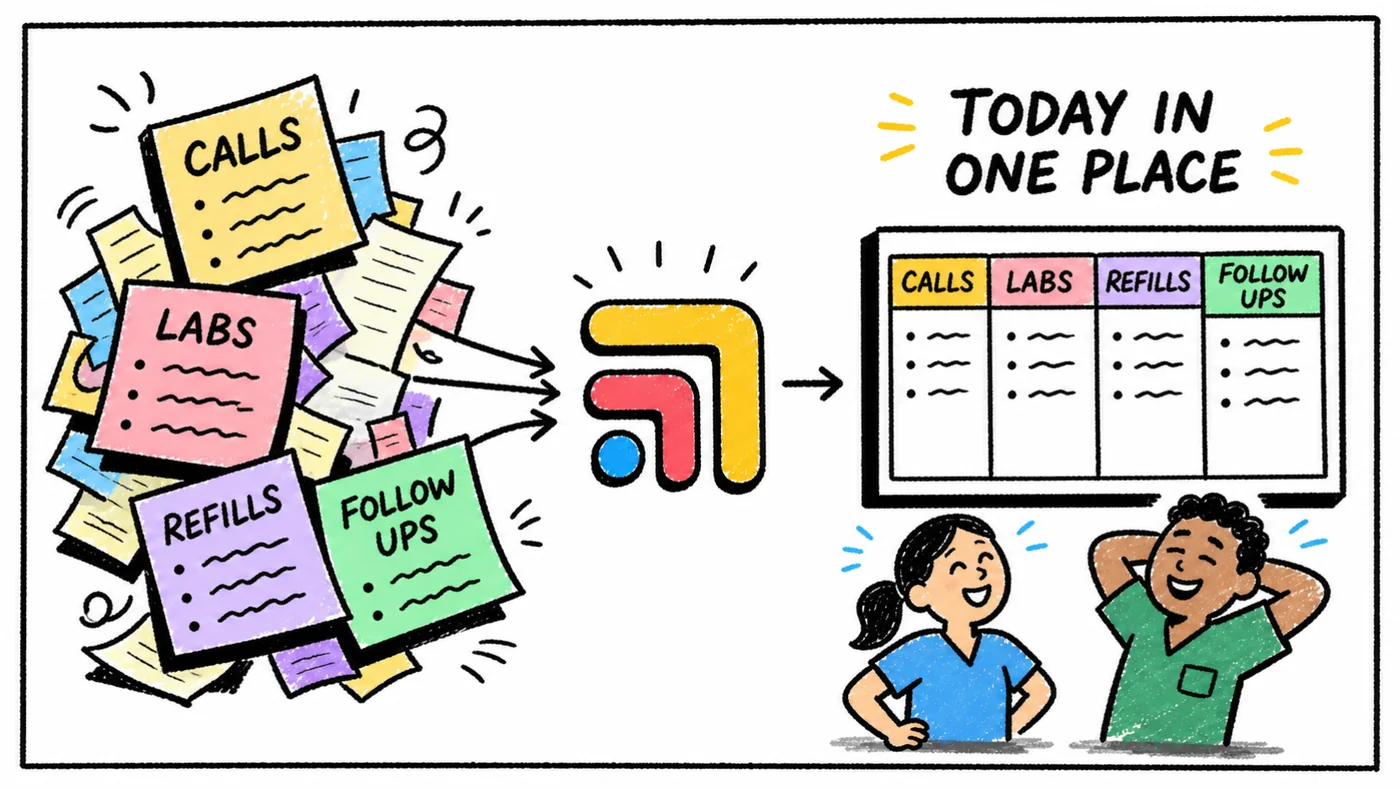
Every tool in a DPC clinic is good at its own job, and none of them were built to talk to each other. A patient text turns into a refill in the chart, which needs a review, which needs a reply, and the follow-up lives in someone's head. That isn't anyone's fault. The tools just don't share a to-do list.
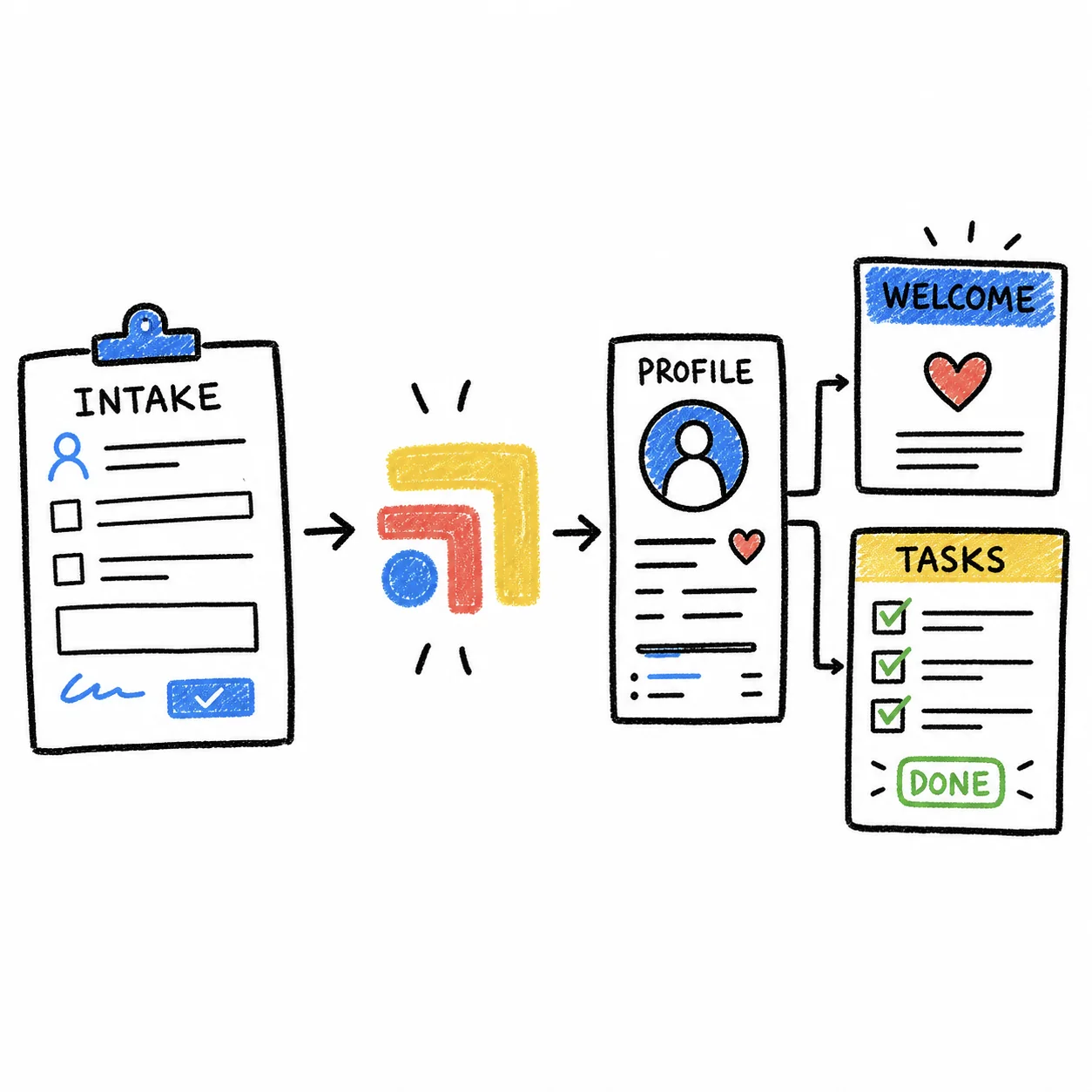
That's the job Tabflows does. Tabflows is a dedicated tech team for DPC clinics. We connect the tools you already chose and give your team one place for chat, tasks and patient context, with managed workflows for the repeat work like refills, lab follow-ups and onboarding. You keep every tool you picked.
Frequently asked questions
What is the best EMR for direct primary care?
It depends on the practice you run. A solo doctor usually starts with Atlas.md or Hint's Launch plan, a clinic selling to employers starts with Hint Pro, an integrative practice starts with Cerbo, and a doctor opening on a tight budget starts with Charm's free plan.
Which DPC EMR is cheapest for a brand new practice?
Charm has a free plan for one provider with up to 50 encounters a month. Atlas.md offers 30 days free before your practice launches, and Hint lets you pay nothing until you launch. See the best EMR for your first year of DPC.
Do I need a different EMR if I still bill some insurance?
Often, yes. Most DPC-first EMRs assume you don't file claims. Charm sells electronic claims as an add-on, and OptiMantra lists insurance billing at $0.25 a claim, so those are worth a look for a hybrid practice.
Which EMR is best for a DPC that sells to employers?
Hint is the usual starting point, because employer-sponsored memberships, eligibility syncing and consolidated billing come with its Pro and Scale plans (not Launch).
Should I pick an EMR for the practice I have now or the one I want in three years?
Pick for the next 18 months, then check the price at your target size. Model the monthly bill at your opening panel and at two or three times that, because some EMRs charge by patient count and others by provider.